
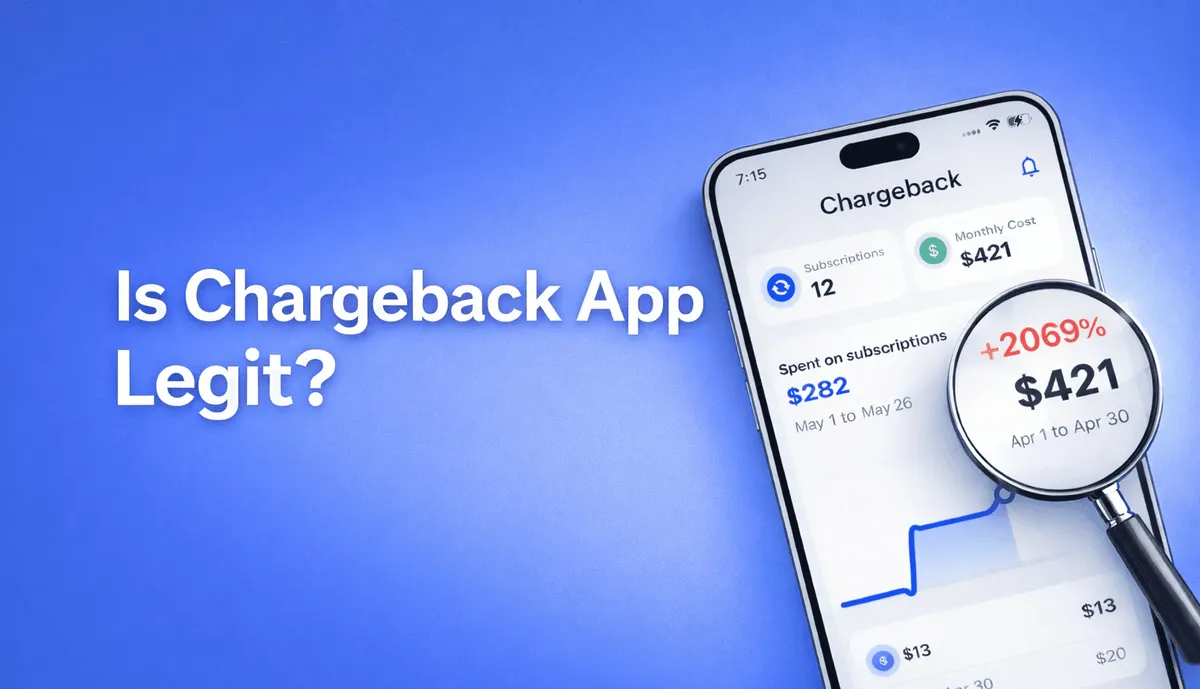
What Is the Chargeback App?
Chargeback (joinchargeback.com) is a subscription management app that positions itself as an "AI-powered" tool to find, manage, and cancel unwanted subscriptions on your behalf. The app connects to your email and bank accounts to detect recurring charges, and claims to use "AI agents" to handle cancellations automatically.
The app is available on iOS, Android, and web.
Chargeback at a Glance
Detail | Info |
App Name | Chargeback (JoinChargeback) |
What It Does | Subscription detection, tracking, cancellation |
Detection Method | Email and bank connection |
Platforms | iOS, Android, Web |
Pricing | $144/year (no free plan) |
Free Tier | No |
Markets Served | Primarily US, but downloadable globally |
Claimed Stats | $30M+ saved, 100K+ subscriptions cancelled, 15K+ subscriptions covered |
Chargeback Features
To be fair, the core feature set is solid in concept:
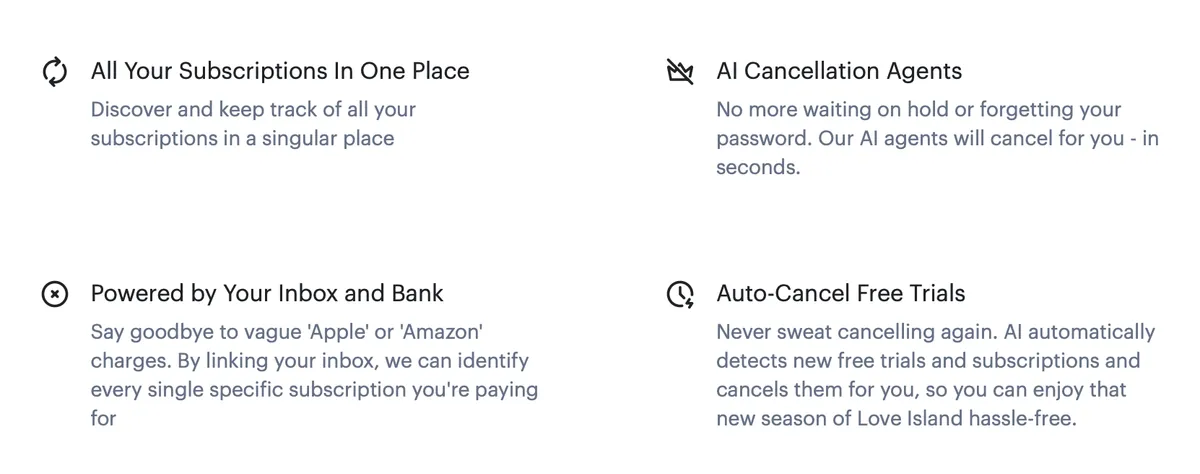
Subscription Detection: Chargeback scans your email inbox and connected bank accounts to find recurring charges, including subscriptions you may have forgotten about. This dual detection approach (email + bank) is actually one of the stronger methods available, most apps only do one or the other. Email can be great for finding ongoing free-trials.
Cancellation Assistance: The main selling point. Chargeback claims to cancel subscriptions on your behalf using "AI agents." You select the subscription you want gone, and theoretically the app handles the rest, contacting the provider, navigating cancellation flows, and confirming the cancellation. This is similar to Rocket Money's model but using "AI agents".
Subscription Dashboard: A central view of all detected subscriptions with spend tracking, renewal dates, and free trial monitoring.
Opt-Out Reminders: Notifications before renewals or free trial conversions, giving you the chance to cancel before you're charged.
Refund Requests: The app also claims to help request refunds for charges you didn't intend.
Chargeback Pricing: $144/Year with No Free Option
This is where things start to get a bit funky.
Chargeback charges $70-$144 per year (plus tax) for a single "Premium" plan. This price changes based on geography. There is no free tier, no limited free version, and no monthly payment option visible on their pricing page.
There's no way into the app without the upfront yearly payment.
For context, here's how that stacks up:
App | Price | Free Tier? |
Chargeback | $70-$144/year (geo-dependant) | ❌ No |
Rocket Money | $6–12/month ($72–144/year) | ✅ Yes |
Hiatus | $9.99/month ($120/year) | ✅ Yes |
Trim | Free (advanced for OneMain users) | ✅ Yes |
Bobby/Subby | $4 one-time | ✅ Free version |
Orbit Money | TBD (free tier planned) | ✅ Planned |
Chargeback is at the top end of pricing in this category while being one of the only apps with no free option at all. For an app whose purpose is to save you money on subscriptions, that's a bit rough, you need to save more than $144/year in cancelled subscriptions just to break even.
They do offer a 30-day money-back guarantee, but as we'll cover in the next section.
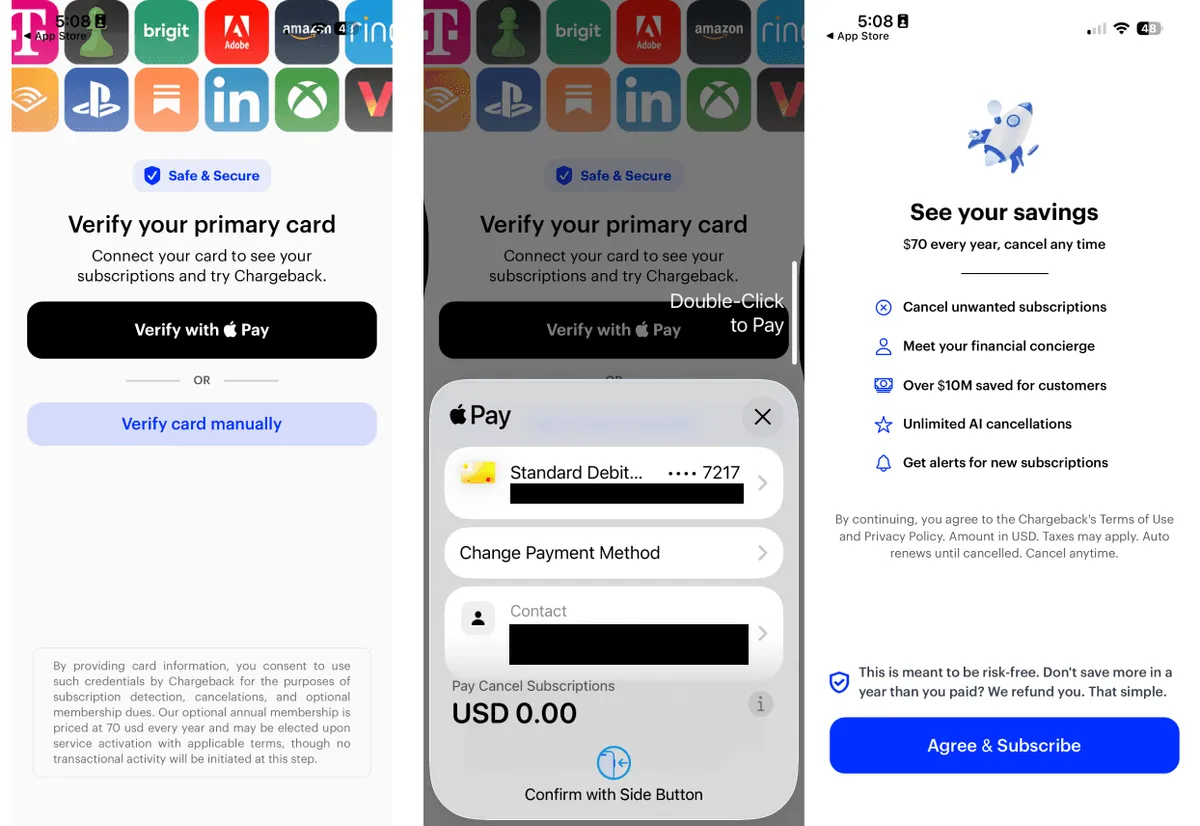
It's very hard to actually see the pricing when signing up. It is carefully not highlighted.
The Paywall Problem: What Users Are Saying
This is where the Chargeback app has drawn the most criticism, and it's worth paying attention to.
Multiple users on Trustpilot and app store reviews describe a similar experience: downloading the app, being shown what appears to be a $0.00 charge or a free trial screen, and then being immediately charged between $36 and $84+ without clear warning.
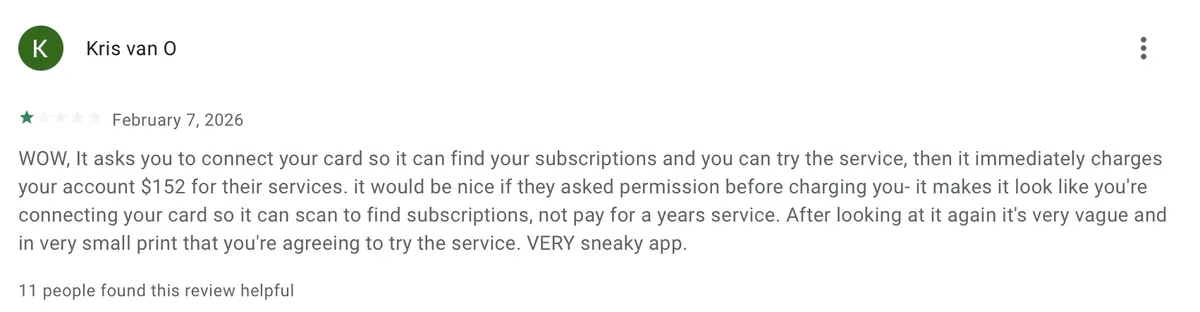
One Trustpilot reviewer described being directed to a page showing "$0.00" then immediately having two charges ($36.29 and $84.70) deducted from their account. Others describe being charged for an annual plan when they expected a monthly trial.
Support does mention the pricing is shown when signing up to the app, but the pattern is consistent enough that it raises legitimate concerns about how clearly the pricing is communicated during the signup flow. For an app that claims to be "built for transparency," the number of users reporting surprise charges is pretty high.
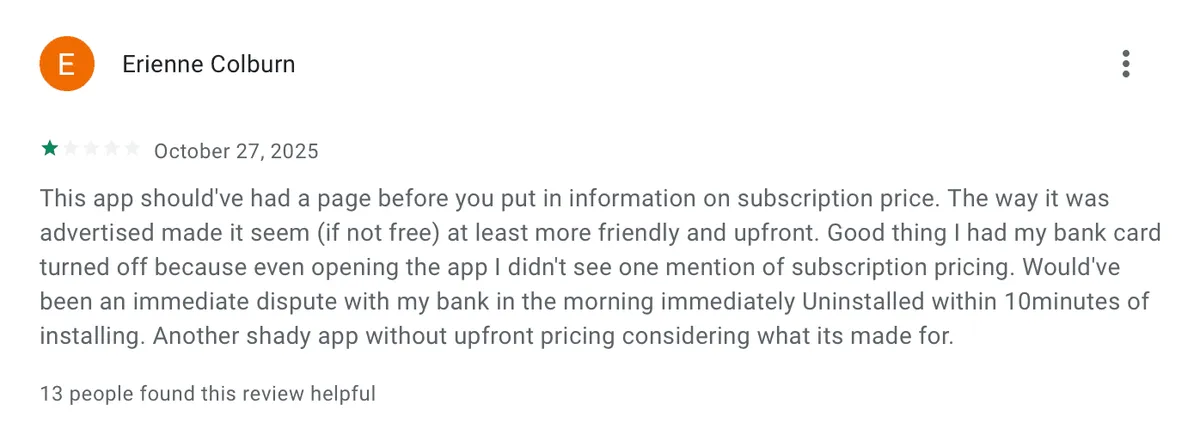
Chargeback does respond to many of these reviews pointing to their 30-day money-back guarantee, and some users report that customer support (a person named "Bella" is mentioned frequently) does process refunds.
But the fact that so many users need to request a refund almost immediately after downloading suggests the onboarding flow itself may be the problem.
Trustpilot Red Flags: A Closer Look at the Reviews
Chargeback has a 4.4 rating on Trustpilot with nearly 6,000 reviews, which looks impressive on the surface. But Trustpilot itself has flagged the profile with two warnings:
"May use unsupported invitation methods": This means Trustpilot has detected the company may be soliciting reviews in ways that violate their guidelines, such as incentivising reviews, review-gating, or using third-party services.
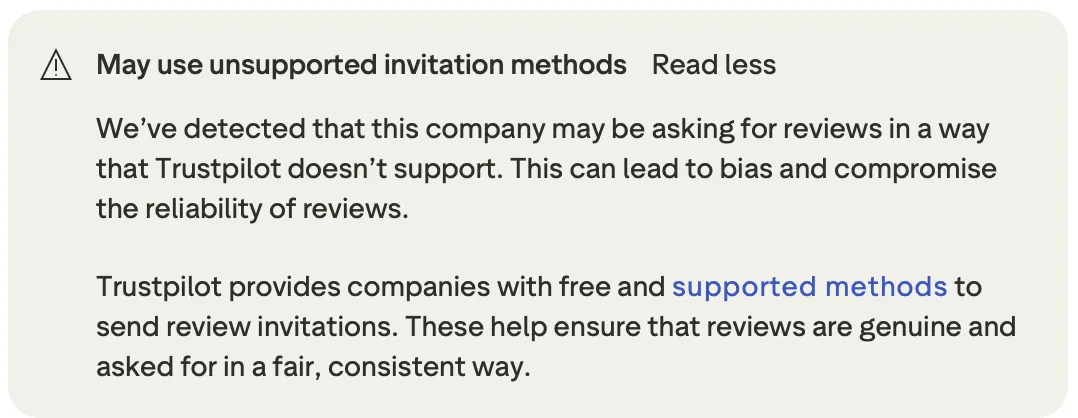
"Merged reviews and profile": This indicates they've consolidated multiple business profiles, which can inflate total review counts.
Beyond the platform flags, the review patterns themselves are worth noting:
The "1 review" pattern: The vast majority of positive reviews come from accounts with only 1 review ever. These users created a Trustpilot account solely to review Chargeback and never reviewed anything else. This is the single biggest indicator of inorganic reviews.
Extremely thin content: Many 5-star reviews are one-liners like "Best app," "Nice app," "Nice application," "Quick and easy." No specific details about which subscriptions were found, how much was saved, or what the experience was actually like. Real users who are happy and actually saved hundreds of dollars tend to share specifics.
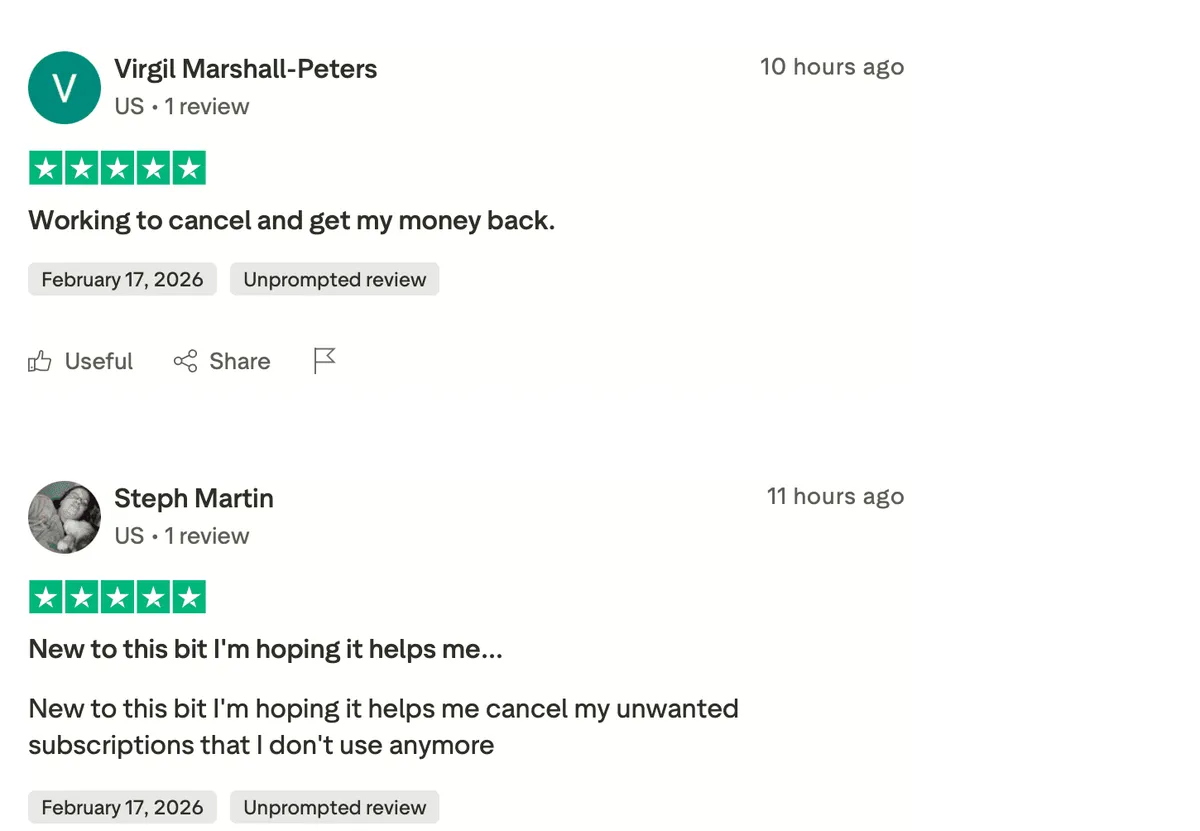
The refund-then-review pattern: Several positive reviews mention customer support by name ("Bella was exceptional") and describe getting a refund after an unexpected charge. These reviews give 5 stars for the refund experience, not the product itself. This is likely a pattern where support agents ask for a review after processing a refund, it's not outright fake, but it inflates the rating with reviews that essentially say "they charged me unexpectedly but gave me my money back."
Volume and timing: Multiple 5-star reviews coming in per hour, from accounts across wildly different geographies (Germany, Papua New Guinea, Indonesia, Canada, US), all with the same generic format. This doesn't match organic review patterns.
Meanwhile, the detailed reviews are negative. The most specific, credible reviews are the 1-star and 2-star ones describing real experiences with unexpected charges, failed cancellations, and poor support communication. These include specific dollar amounts, real interactions, and actual frustrations.
We're not saying every positive review is fake, but the patterns are significant enough to warrant caution. A 4.4 rating with these flags should be taken with a fair amount of skepticism.
The "AI Agent" Question
Chargeback markets itself heavily around "AI agents", the homepage says "Our AI agents find and cancel unwanted subscriptions in seconds" and features the tagline "Agentic Subscription Management."
This is likely to ride the recent AI agents hype and novelty across consumer audiences.
But their own pricing page lists "Your personal financial concierge" as a premium feature, and many Trustpilot reviews describe interacting with human support agents (again, "Bella" appears frequently) for cancellations and refund requests.
This raises an honest question: how much of the cancellation process is actually handled by AI, and how much is human concierge work dressed up with AI branding?

To be clear, there's nothing wrong with using human concierge services. Rocket Money and Hiatus both do this. The concern is about the gap between the marketing ("AI agents cancel in seconds") and the reality that users frequently report (waiting for human agents to process requests, delays, mixed results).
The claim of "$30M+ saved for consumers" and "100K+ subscriptions cancelled" are also presented without any source or methodology. These numbers may be accurate, but there's no way to verify them, and the combination of unverifiable stats with aggressive AI marketing signifies the need for some healthy caution.
Who's Behind Chargeback?
One thing that stands out is the lack of transparency around the founding team or company structure. The "About Us" page describes Chargeback's mission and values but doesn't name a single founder, CEO, or team member. There are no team photos, no company history, and no mention of where the company is registered or based.
You can find a few LinkedIn profiles linked to Chargeback, but the absence of a public-facing team on their own website or socials is unusual for a company asking users to connect their bank accounts and email.
This isn't completely abnormal, especially for a company that may not want to build their following around their founders profiles.
But, for comparison, Rocket Money is backed by Rocket Companies (a publicly listed US financial company). Emma is founded by two named Italian entrepreneurs with a public track record. Frollo is an accredited data recipient regulated by the ACCC in Australia. These companies make it easy to understand who's behind them and who's accountable.
With Chargeback, that accountability trail is harder to follow.
Pros and Cons
Pros | Cons |
Dual detection (email + bank) is a strong approach | $144/year with no free option is expensive |
Cancellation assistance saves time if it works | Users report deceptive paywalls and surprise charges |
30-day money-back guarantee exists | Trustpilot profile flagged for review manipulation |
Active customer support (refunds do get processed) | Review patterns suggest significant artificial inflation |
The core concept addresses a real problem | "AI agent" claims don't fully align with user-reported experience |
No visible founding team or company transparency | |
No free tier to test before committing $144 |
Chargeback Alternatives Worth Considering
If you're looking for subscription management but want something more transparent, here are some alternatives depending on your market and needs:
In the US
Rocket Money The most established option. Free tier available with subscription detection and budgeting. Premium ($6–12/month) adds cancellation concierge and bill negotiation. Backed by Rocket Companies. Much more transparent about who they are and how they operate.
Hiatus Simpler than Rocket Money, focused on subscription tracking and bill negotiation. Free version available. $9.99/month for premium with concierge services.
Trim Free subscription tracking with bill negotiation. Advanced features for OneMain customers. Web-based, no mobile app.
For International Users
Bobby (iOS) / Subby (Android). Manual subscription tracking, works globally, one-time purchase of around $4. No bank connection, no automation, but also no ongoing charges and full privacy.
TrackMySubs Manual tracker designed for freelancers and businesses managing SaaS tools. Web-based, works globally.
Upcoming
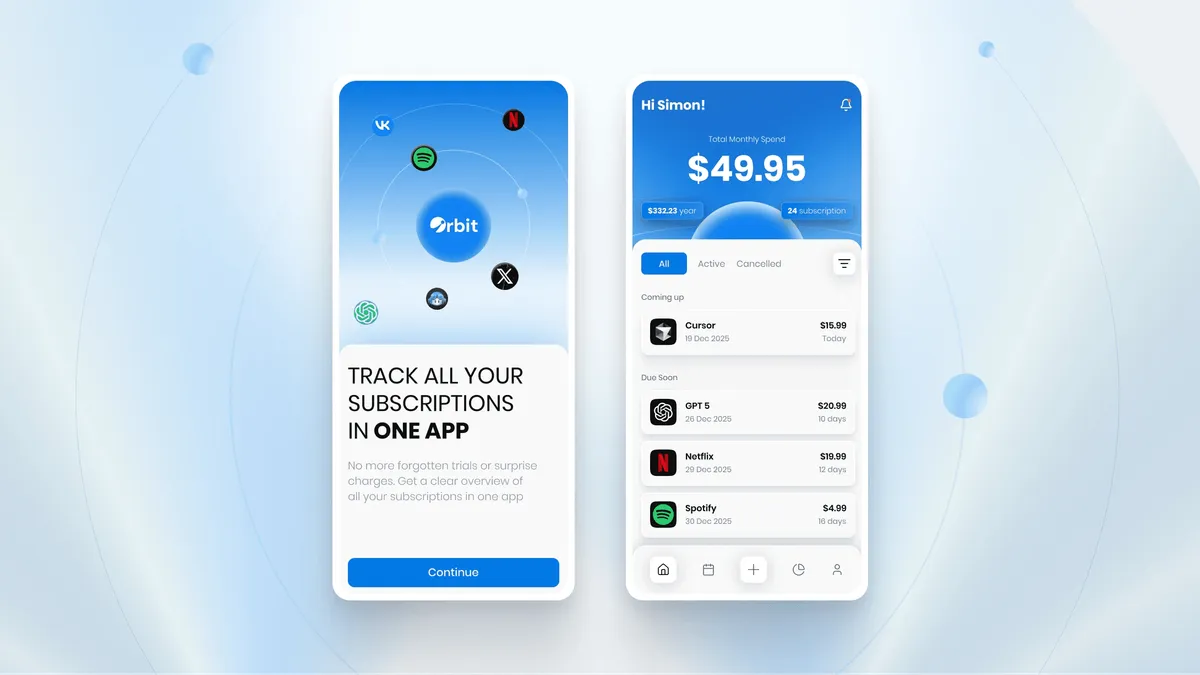
Orbit Money A subscription management app being built with a focus on transparency and user-first design. Orbit plans to combine email scanning, bank connection, and manual entry for subscription detection, with cancellation guidance, deal matching, and free trial tracking. Australia and US are priority launch markets. Free to get started.
Unlike Chargeback, Orbit is being designed so that basic subscription tracking is free, with premium features clearly communicated and priced without hidden paywalls. Monetisation is planned with premium features on top.
Try Orbit or check out our free cancel guide tool to look up how to find hidden subs and cancel them right now.
Should You Use the Chargeback App?
The honest answer: the core idea behind Chargeback is decent, the app is very clean, it has strong features, and some users do report positive experiences with subscription cancellations and refunds. The problem isn't the concept, it's the execution around pricing, transparency, and trust.
You might consider Chargeback if:
You're willing to pay $144/year upfront with no trial
You're comfortable with the paywall experience after reading about it
You have a large number of subscriptions and genuinely believe the cancellation service will save you significantly more than $144
But does this outweight the other alternatives available out there?
You should probably look elsewhere if:
You want to try before you buy (no free tier)
You're put off by the Trustpilot flags and review patterns
You want clear transparency about who's behind the app
You're outside the US and want local bank support
You'd rather use a tool with a proven track record and visible accountability
For most users, Rocket Money offers a more transparent, better-established alternative in the US market with a generous free tier. For international users, tools like Bobby, PocketSmith, or the upcoming Orbit Money are worth exploring.
At the end of the day, a subscription management app should help you save money and feel more in control, not make you feel like you need to cancel it as your first task.
FAQs
Is the Chargeback app legit?
Chargeback is a real app available on iOS and Android with a functioning subscription detection and cancellation service. However, its Trustpilot profile has been flagged for potentially using unsupported review invitation methods, and multiple users report surprise charges during signup. Is Chargeback App a Scam? Well no, not in the traditional sense, but the transparency concerns are significant.
Is the Chargeback app free?
No. Chargeback charges $144/year with no free tier. There's no free trial in the traditional sense, though they offer a 30-day money-back guarantee. Some users report being confused about pricing during signup and being charged more than expected.
How much does the Chargeback app cost?
$144 per year plus tax. This is a single "Premium" plan with no monthly option and no free version. This makes it one of the most expensive consumer subscription management apps on the market.
Does the Chargeback app actually cancel subscriptions?
Some users report successful cancellations. However, the marketing suggests "AI agents cancel in seconds" while user reviews describe interacting with human concierge support and waiting for processing. Results appear to vary by subscription type and provider.
Is the Chargeback app safe?
Chargeback connects to your email and bank accounts for subscription detection. While this is standard practice for apps in this category (Rocket Money, Hiatus, and others do the same), the lack of transparency about the company's team, location, and corporate structure makes it harder to evaluate than competitors backed by known entities.
What are the best alternatives to the Chargeback app?
In the US, Rocket Money is the most established alternative with a free tier. Hiatus is a simpler option. For international users, manual trackers like Bobby/Subby work globally, and Orbit Money is building a dedicated subscription management app with Australian, US, and European support planned. See our full comparison of subscription trackers.
Does Chargeback work outside the US?
The app is downloadable globally, but its bank connection features are primarily designed for US financial institutions. International users may have limited functionality, particularly around automatic subscription detection and cancellation services.
Why does Chargeback have so many Trustpilot reviews?
Chargeback has nearly 6,000 Trustpilot reviews, but the profile has been flagged by Trustpilot for "unsupported invitation methods" and "merged reviews and profile." Many positive reviews come from single-review accounts with generic one-line content, which may indicate review solicitation or inflation practices.