

Wednesday, January 7, 2026
Subscription Overload: Why Too Many Subscriptions Are Draining Consumers and What You Can Do About It

Simon Chadwick
Founder & CEO
If you’ve ever opened your bank app and thought, “Why is my money disappearing every month?”, you’re not alone.
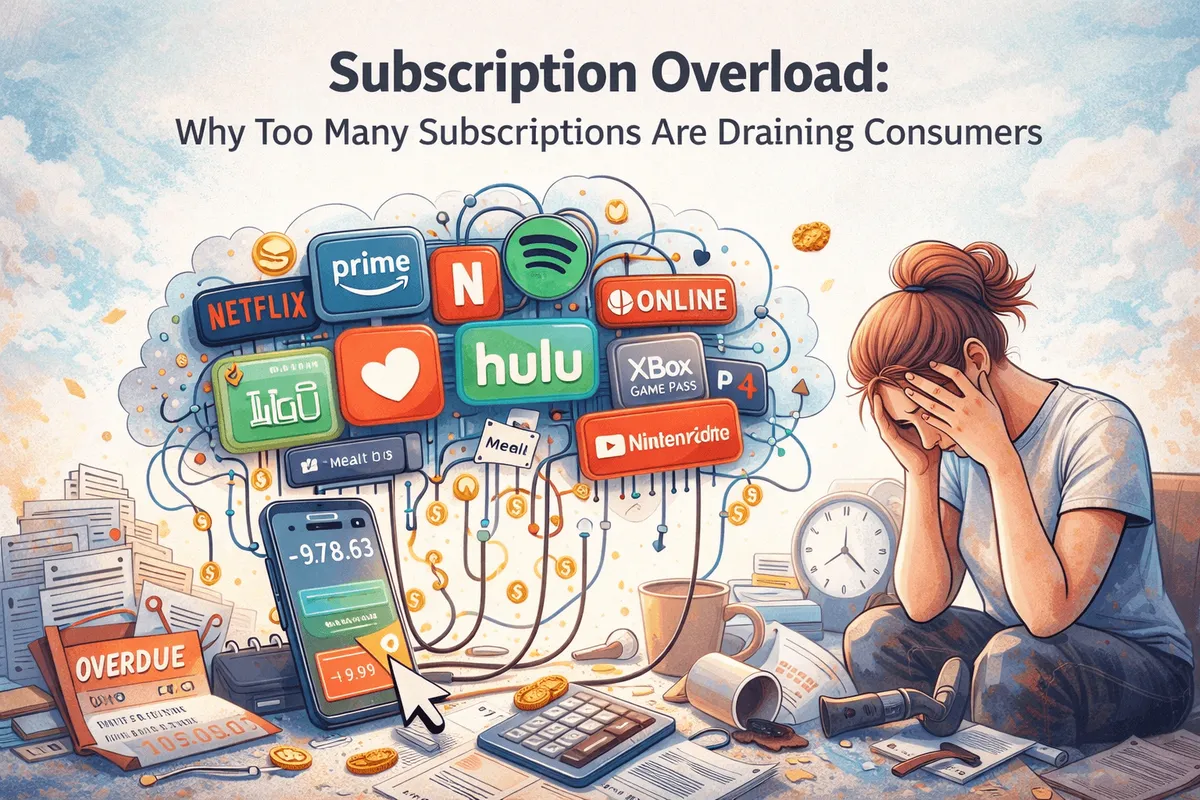
The modern subscription landscape has quietly expanded into almost every part of daily life. From entertainment and video streaming, to content creation tools, gaming, fitness, food, and even email newsletter tools, the average consumer is now juggling far more subscriptions than they realize.
A research by CR+research states that the average user underestimates subscription spend by over 2.5x
And it's not just about cost, simply not knowing what you're paying for, or knowing how to cancel your current subscriptions can feel frustrating and like you're not in control. This is now called subscription fatigue.
This article explores why many subscriptions feel overwhelming, how the subscription economy created this problem, and practical ways to regain control, without sacrificing convenience or the enjoyment you get from your services.
The Rise of the Subscription Economy
The subscription economy didn’t happen overnight. Companies discovered that recurring payments created predictable revenue streams, while users liked the low upfront cost.
Instead of buying DVDs, we now stream shows. Instead of owning software, we subscribe to tools that update automatically. But we don't pay once, we pay consistently, even if we don't these subscriptions much.
And today, with the rise of social media and the internett, there are more services available than ever before.
A single household may pay for multiple streaming services, Music susbcriptions, cloud storage, gaming subscriptions, productivity and health apps, gym memberships, and even meal kits, all of these quietly renewing every month.
What started as one subscription service has multiplied into multiple services, often without clear oversight.
Some of the tools that were once free, all started adding premium tiers and often shifting free features into those tiers
This shift has fundamentally changed consumer behavior, and not always for the better.
When Convenience Turns Into Overload
At first, each individual subscription feels reasonable. One for movies, one for music, one for workouts. But over time, the number of subscription commitments grows. Suddenly, you’re managing 10+ subscriptions, many of which aren't being used enough.
And cancelling is hard or we forget.
This is where “subscription fatigue” sets in. The user experience suffers as people forget what they’re paying for, miss a renewal date, or keep a service “just in case.”
The mental burden of trying to keep track of every subscription adds to stress, especially when budgets are already tight.
Then we see a new service we want and stress sets in as we don't know where we currently stand, but deep down we know we have so much waste.
The problem isn’t just money, it’s money, mental clarity and time.
Streaming Services: The Biggest Culprit
For general consumers, entertainment is often where subscription overload begins. Households stack streaming subscriptions to access exclusive shows and original content.
A typical setup might include Netflix, Amazon Prime, Apple TV, Hulu, Spotify, and YouTube Premium.
We start with one, but then it doesn't include that show we want. So we sign up to the free trial, then we forget to cancel.
Each Netflix subscription or tv streaming app seems affordable alone, but combined, they rival the cost of old tv providers. Then if toy add live tv, sports like ESPN, or international platforms such as Hotstar, and the costs rise fast, especially after regular price increases.
Funny enough, many people tried to cut the cord on the cost of live TV, only to recreate cable through subscription-based platforms.
Beyond Streaming: Subscriptions Everywhere
Entertainment is only part of the picture. Box subscription services, productivity tools, cloud storage, and even free subscription trials that quietly convert to paid plans all add up.
In gaming, platforms like Xbox, Sony, Nintendo Switch Online, and PlayStation Plus lock features behind monthly access and subscription models. These ecosystems now heavily encourage ongoing payments rather than one-time purchases.
Meanwhile, your inbox fills with promotional emails, receipts, and trial reminders, but it's cluttered. That forgotten newsletter or app you signed into with a quick login and to access with a free trail is likely still be charging you at full-price.
Dark Patterns and The Trap of Free Trials
Free trials are meant to lower the barrier to entry, but in the world of subscription services, they often do the opposite. Merchants now purposefully engineer free-trials because they know that people forget, and this is how they onboard new users and make a good chunk of their revenue.
Everybody hate it, but we keep tolerating it as the system hasn't yet changed.
This is an element of a practice called Dark Patterns.
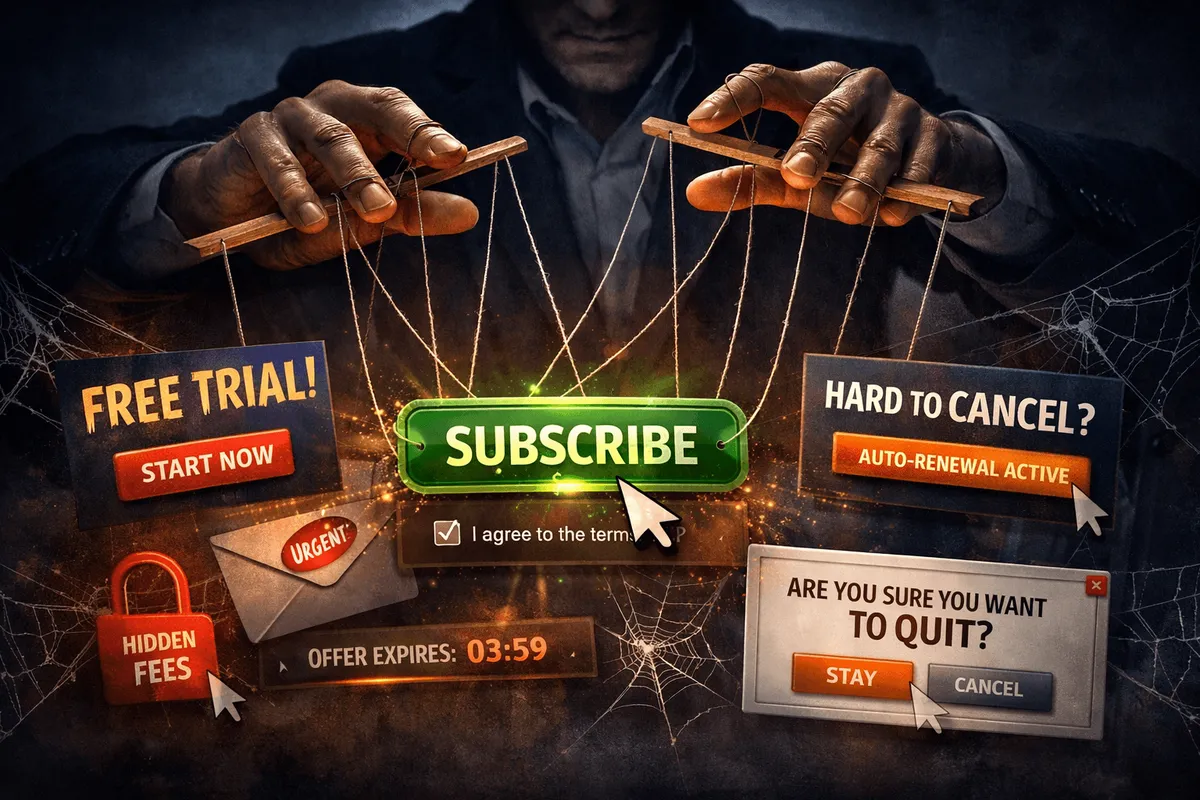
Dark patterns are unethical practices used to trap consumers and make it harder for them to cancel.
Some subscription platforms hide the unsubscribe option, force you to cancel by talking to a sales rep, use manipulative or confusing language around renewal, have 5 "are you sure?" screens or send reminders straight to your inbox at the worst possible time, if they send them at all.
Others rely on vague terms buried in the terms and conditions to keep users locked in longer than intended.
A few of the common fixes are simple but powerful: Use virtual cards that you can cancel or auto-cancel and set up alerts the moment you sign up, this can be done automatically through most subscription tracking tools.
Having this increase of control and awareness alone can prevent a handful of unwanted subscriptions from draining your budget over time.
Why Consumers Keep Paying
So why don’t people just cancel their subscriptions?
Several factors play a role:
Some people are scared to even look at how much are paying so avoid it
Individual cost of subs feels small until the total amount is seen
Certain bundles make it hard to separate value from waste
Fear of losing access or needing to resubscribe in the future
Forgotten subscriptions due to fragrementation and lack of subscription management tools
Confusing privacy policy language and hidden cancellations
For so many people, simply reviewing finance and budget decisions around subscriptions simply feels overwhelming.
How to Take Back Control
The good news? You don’t need to eliminate everything, just be intentional and rely on tools.
Audit and Cut Back
List every subscription you pay for, including trials. Identify what you truly use. If you only watch one show a year, consider keeping one subscription at a time. Rotating services one month at a time is often cheaper than holding all of them.
Systemise your free trials
One of the best ways to keep on top of your subscriptions before they get out of control is by systemising your free-trials. This means either having a disciplined process for alerts when signing up or using virtual cards to give you more control. Either cards that expire or that you can easily cancel what you need to.
Cancel Without Guilt
If a service no longer adds value, unsubscribe. Remember, subscriptions may always be restarted later. Canceling isn’t failure, it’s smart consumer choice.
Bundle Strategically
Some platforms offer a bundle that genuinely saves money. Just be sure it doesn’t hide extras you don’t need.
Set Alerts and Track Spending
Use bank alerts or apps that flag renewals. A simple alert can prevent wasted spending.
A Healthier Relationship With Subscriptions
Subscriptions aren’t inherently bad. They can improve productivity, entertainment, and access to valuable products and services. But without awareness, they quietly turn into overload.
The goal isn’t to live with one or two subscriptions forever, it’s to choose intentionally. When you align spending with what you actually use, you protect your budget, reduce stress, and regain control of your digital life.
In a world built on recurring payments, the most powerful move a subscriber can make is paying attention, having a simple system and knowing when to cut back.
The Orbit App is building for this very reason, making it easier for users to get back in control over their subscriptions and digital life.

Wednesday, January 7, 2026
Subscription Overload: Why Too Many Subscriptions Are Draining Consumers and What You Can Do About It

Simon Chadwick
Founder & CEO
If you’ve ever opened your bank app and thought, “Why is my money disappearing every month?”, you’re not alone.
The modern subscription landscape has quietly expanded into almost every part of daily life. From entertainment and video streaming, to content creation tools, gaming, fitness, food, and even email newsletter tools, the average consumer is now juggling far more subscriptions than they realize.
A research by CR+research states that the average user underestimates subscription spend by over 2.5x
And it's not just about cost, simply not knowing what you're paying for, or knowing how to cancel your current subscriptions can feel frustrating and like you're not in control. This is now called subscription fatigue.
This article explores why many subscriptions feel overwhelming, how the subscription economy created this problem, and practical ways to regain control, without sacrificing convenience or the enjoyment you get from your services.
The Rise of the Subscription Economy
The subscription economy didn’t happen overnight. Companies discovered that recurring payments created predictable revenue streams, while users liked the low upfront cost.
Instead of buying DVDs, we now stream shows. Instead of owning software, we subscribe to tools that update automatically. But we don't pay once, we pay consistently, even if we don't these subscriptions much.
And today, with the rise of social media and the internett, there are more services available than ever before.
A single household may pay for multiple streaming services, Music susbcriptions, cloud storage, gaming subscriptions, productivity and health apps, gym memberships, and even meal kits, all of these quietly renewing every month.
What started as one subscription service has multiplied into multiple services, often without clear oversight.
Some of the tools that were once free, all started adding premium tiers and often shifting free features into those tiers
This shift has fundamentally changed consumer behavior, and not always for the better.
When Convenience Turns Into Overload
At first, each individual subscription feels reasonable. One for movies, one for music, one for workouts. But over time, the number of subscription commitments grows. Suddenly, you’re managing 10+ subscriptions, many of which aren't being used enough.
And cancelling is hard or we forget.
This is where “subscription fatigue” sets in. The user experience suffers as people forget what they’re paying for, miss a renewal date, or keep a service “just in case.”
The mental burden of trying to keep track of every subscription adds to stress, especially when budgets are already tight.
Then we see a new service we want and stress sets in as we don't know where we currently stand, but deep down we know we have so much waste.
The problem isn’t just money, it’s money, mental clarity and time.
Streaming Services: The Biggest Culprit
For general consumers, entertainment is often where subscription overload begins. Households stack streaming subscriptions to access exclusive shows and original content.
A typical setup might include Netflix, Amazon Prime, Apple TV, Hulu, Spotify, and YouTube Premium.
We start with one, but then it doesn't include that show we want. So we sign up to the free trial, then we forget to cancel.
Each Netflix subscription or tv streaming app seems affordable alone, but combined, they rival the cost of old tv providers. Then if toy add live tv, sports like ESPN, or international platforms such as Hotstar, and the costs rise fast, especially after regular price increases.
Funny enough, many people tried to cut the cord on the cost of live TV, only to recreate cable through subscription-based platforms.
Beyond Streaming: Subscriptions Everywhere
Entertainment is only part of the picture. Box subscription services, productivity tools, cloud storage, and even free subscription trials that quietly convert to paid plans all add up.
In gaming, platforms like Xbox, Sony, Nintendo Switch Online, and PlayStation Plus lock features behind monthly access and subscription models. These ecosystems now heavily encourage ongoing payments rather than one-time purchases.
Meanwhile, your inbox fills with promotional emails, receipts, and trial reminders, but it's cluttered. That forgotten newsletter or app you signed into with a quick login and to access with a free trail is likely still be charging you at full-price.
Dark Patterns and The Trap of Free Trials
Free trials are meant to lower the barrier to entry, but in the world of subscription services, they often do the opposite. Merchants now purposefully engineer free-trials because they know that people forget, and this is how they onboard new users and make a good chunk of their revenue.
Everybody hate it, but we keep tolerating it as the system hasn't yet changed.
This is an element of a practice called Dark Patterns.

Dark patterns are unethical practices used to trap consumers and make it harder for them to cancel.
Some subscription platforms hide the unsubscribe option, force you to cancel by talking to a sales rep, use manipulative or confusing language around renewal, have 5 "are you sure?" screens or send reminders straight to your inbox at the worst possible time, if they send them at all.
Others rely on vague terms buried in the terms and conditions to keep users locked in longer than intended.
A few of the common fixes are simple but powerful: Use virtual cards that you can cancel or auto-cancel and set up alerts the moment you sign up, this can be done automatically through most subscription tracking tools.
Having this increase of control and awareness alone can prevent a handful of unwanted subscriptions from draining your budget over time.
Why Consumers Keep Paying
So why don’t people just cancel their subscriptions?
Several factors play a role:
Some people are scared to even look at how much are paying so avoid it
Individual cost of subs feels small until the total amount is seen
Certain bundles make it hard to separate value from waste
Fear of losing access or needing to resubscribe in the future
Forgotten subscriptions due to fragrementation and lack of subscription management tools
Confusing privacy policy language and hidden cancellations
For so many people, simply reviewing finance and budget decisions around subscriptions simply feels overwhelming.
How to Take Back Control
The good news? You don’t need to eliminate everything, just be intentional and rely on tools.
Audit and Cut Back
List every subscription you pay for, including trials. Identify what you truly use. If you only watch one show a year, consider keeping one subscription at a time. Rotating services one month at a time is often cheaper than holding all of them.
Systemise your free trials
One of the best ways to keep on top of your subscriptions before they get out of control is by systemising your free-trials. This means either having a disciplined process for alerts when signing up or using virtual cards to give you more control. Either cards that expire or that you can easily cancel what you need to.
Cancel Without Guilt
If a service no longer adds value, unsubscribe. Remember, subscriptions may always be restarted later. Canceling isn’t failure, it’s smart consumer choice.
Bundle Strategically
Some platforms offer a bundle that genuinely saves money. Just be sure it doesn’t hide extras you don’t need.
Set Alerts and Track Spending
Use bank alerts or apps that flag renewals. A simple alert can prevent wasted spending.
A Healthier Relationship With Subscriptions
Subscriptions aren’t inherently bad. They can improve productivity, entertainment, and access to valuable products and services. But without awareness, they quietly turn into overload.
The goal isn’t to live with one or two subscriptions forever, it’s to choose intentionally. When you align spending with what you actually use, you protect your budget, reduce stress, and regain control of your digital life.
In a world built on recurring payments, the most powerful move a subscriber can make is paying attention, having a simple system and knowing when to cut back.
The Orbit App is building for this very reason, making it easier for users to get back in control over their subscriptions and digital life.

Wednesday, January 7, 2026
Subscription Overload: Why Too Many Subscriptions Are Draining Consumers and What You Can Do About It

Simon Chadwick
Founder & CEO
If you’ve ever opened your bank app and thought, “Why is my money disappearing every month?”, you’re not alone.
The modern subscription landscape has quietly expanded into almost every part of daily life. From entertainment and video streaming, to content creation tools, gaming, fitness, food, and even email newsletter tools, the average consumer is now juggling far more subscriptions than they realize.
A research by CR+research states that the average user underestimates subscription spend by over 2.5x
And it's not just about cost, simply not knowing what you're paying for, or knowing how to cancel your current subscriptions can feel frustrating and like you're not in control. This is now called subscription fatigue.
This article explores why many subscriptions feel overwhelming, how the subscription economy created this problem, and practical ways to regain control, without sacrificing convenience or the enjoyment you get from your services.
The Rise of the Subscription Economy
The subscription economy didn’t happen overnight. Companies discovered that recurring payments created predictable revenue streams, while users liked the low upfront cost.
Instead of buying DVDs, we now stream shows. Instead of owning software, we subscribe to tools that update automatically. But we don't pay once, we pay consistently, even if we don't these subscriptions much.
And today, with the rise of social media and the internett, there are more services available than ever before.
A single household may pay for multiple streaming services, Music susbcriptions, cloud storage, gaming subscriptions, productivity and health apps, gym memberships, and even meal kits, all of these quietly renewing every month.
What started as one subscription service has multiplied into multiple services, often without clear oversight.
Some of the tools that were once free, all started adding premium tiers and often shifting free features into those tiers
This shift has fundamentally changed consumer behavior, and not always for the better.
When Convenience Turns Into Overload
At first, each individual subscription feels reasonable. One for movies, one for music, one for workouts. But over time, the number of subscription commitments grows. Suddenly, you’re managing 10+ subscriptions, many of which aren't being used enough.
And cancelling is hard or we forget.
This is where “subscription fatigue” sets in. The user experience suffers as people forget what they’re paying for, miss a renewal date, or keep a service “just in case.”
The mental burden of trying to keep track of every subscription adds to stress, especially when budgets are already tight.
Then we see a new service we want and stress sets in as we don't know where we currently stand, but deep down we know we have so much waste.
The problem isn’t just money, it’s money, mental clarity and time.
Streaming Services: The Biggest Culprit
For general consumers, entertainment is often where subscription overload begins. Households stack streaming subscriptions to access exclusive shows and original content.
A typical setup might include Netflix, Amazon Prime, Apple TV, Hulu, Spotify, and YouTube Premium.
We start with one, but then it doesn't include that show we want. So we sign up to the free trial, then we forget to cancel.
Each Netflix subscription or tv streaming app seems affordable alone, but combined, they rival the cost of old tv providers. Then if toy add live tv, sports like ESPN, or international platforms such as Hotstar, and the costs rise fast, especially after regular price increases.
Funny enough, many people tried to cut the cord on the cost of live TV, only to recreate cable through subscription-based platforms.
Beyond Streaming: Subscriptions Everywhere
Entertainment is only part of the picture. Box subscription services, productivity tools, cloud storage, and even free subscription trials that quietly convert to paid plans all add up.
In gaming, platforms like Xbox, Sony, Nintendo Switch Online, and PlayStation Plus lock features behind monthly access and subscription models. These ecosystems now heavily encourage ongoing payments rather than one-time purchases.
Meanwhile, your inbox fills with promotional emails, receipts, and trial reminders, but it's cluttered. That forgotten newsletter or app you signed into with a quick login and to access with a free trail is likely still be charging you at full-price.
Dark Patterns and The Trap of Free Trials
Free trials are meant to lower the barrier to entry, but in the world of subscription services, they often do the opposite. Merchants now purposefully engineer free-trials because they know that people forget, and this is how they onboard new users and make a good chunk of their revenue.
Everybody hate it, but we keep tolerating it as the system hasn't yet changed.
This is an element of a practice called Dark Patterns.

Dark patterns are unethical practices used to trap consumers and make it harder for them to cancel.
Some subscription platforms hide the unsubscribe option, force you to cancel by talking to a sales rep, use manipulative or confusing language around renewal, have 5 "are you sure?" screens or send reminders straight to your inbox at the worst possible time, if they send them at all.
Others rely on vague terms buried in the terms and conditions to keep users locked in longer than intended.
A few of the common fixes are simple but powerful: Use virtual cards that you can cancel or auto-cancel and set up alerts the moment you sign up, this can be done automatically through most subscription tracking tools.
Having this increase of control and awareness alone can prevent a handful of unwanted subscriptions from draining your budget over time.
Why Consumers Keep Paying
So why don’t people just cancel their subscriptions?
Several factors play a role:
Some people are scared to even look at how much are paying so avoid it
Individual cost of subs feels small until the total amount is seen
Certain bundles make it hard to separate value from waste
Fear of losing access or needing to resubscribe in the future
Forgotten subscriptions due to fragrementation and lack of subscription management tools
Confusing privacy policy language and hidden cancellations
For so many people, simply reviewing finance and budget decisions around subscriptions simply feels overwhelming.
How to Take Back Control
The good news? You don’t need to eliminate everything, just be intentional and rely on tools.
Audit and Cut Back
List every subscription you pay for, including trials. Identify what you truly use. If you only watch one show a year, consider keeping one subscription at a time. Rotating services one month at a time is often cheaper than holding all of them.
Systemise your free trials
One of the best ways to keep on top of your subscriptions before they get out of control is by systemising your free-trials. This means either having a disciplined process for alerts when signing up or using virtual cards to give you more control. Either cards that expire or that you can easily cancel what you need to.
Cancel Without Guilt
If a service no longer adds value, unsubscribe. Remember, subscriptions may always be restarted later. Canceling isn’t failure, it’s smart consumer choice.
Bundle Strategically
Some platforms offer a bundle that genuinely saves money. Just be sure it doesn’t hide extras you don’t need.
Set Alerts and Track Spending
Use bank alerts or apps that flag renewals. A simple alert can prevent wasted spending.
A Healthier Relationship With Subscriptions
Subscriptions aren’t inherently bad. They can improve productivity, entertainment, and access to valuable products and services. But without awareness, they quietly turn into overload.
The goal isn’t to live with one or two subscriptions forever, it’s to choose intentionally. When you align spending with what you actually use, you protect your budget, reduce stress, and regain control of your digital life.
In a world built on recurring payments, the most powerful move a subscriber can make is paying attention, having a simple system and knowing when to cut back.
The Orbit App is building for this very reason, making it easier for users to get back in control over their subscriptions and digital life.
Read More Related Articles

Subscription Overload: Why Too Many Subscriptions Are Draining Consumers and What You Can Do About It
Overwhelmed by too many subscriptions? Discover how subscription fatigue happens, hidden free-trial traps, and simple ways to cut back and save money.

Simon Chadwick

What Happened to Mint? Why Intuit Shut Down the Most Popular Budgeting App
Intuit shut Mint in March 2024. Why did this hugely popular budgeting app close down? What are the best budgeting app alternatives for former users?

Simon Chadwick

Annual Subscription Review: What to Ask Yourself Each December
Is your budget optimized for subscriptions? Our subscription review guide helps you decide which subscriptions to keep or cancel as we approach 2026.

Simon Chadwick
Read More Related Articles

Subscription Overload: Why Too Many Subscriptions Are Draining Consumers and What You Can Do About It
Overwhelmed by too many subscriptions? Discover how subscription fatigue happens, hidden free-trial traps, and simple ways to cut back and save money.

Simon Chadwick

What Happened to Mint? Why Intuit Shut Down the Most Popular Budgeting App
Intuit shut Mint in March 2024. Why did this hugely popular budgeting app close down? What are the best budgeting app alternatives for former users?

Simon Chadwick

Annual Subscription Review: What to Ask Yourself Each December
Is your budget optimized for subscriptions? Our subscription review guide helps you decide which subscriptions to keep or cancel as we approach 2026.

Simon Chadwick
Read More Related Articles

Subscription Overload: Why Too Many Subscriptions Are Draining Consumers and What You Can Do About It
Overwhelmed by too many subscriptions? Discover how subscription fatigue happens, hidden free-trial traps, and simple ways to cut back and save money.

Simon Chadwick

What Happened to Mint? Why Intuit Shut Down the Most Popular Budgeting App
Intuit shut Mint in March 2024. Why did this hugely popular budgeting app close down? What are the best budgeting app alternatives for former users?

Simon Chadwick

Annual Subscription Review: What to Ask Yourself Each December
Is your budget optimized for subscriptions? Our subscription review guide helps you decide which subscriptions to keep or cancel as we approach 2026.

Simon Chadwick
Use Orbit to track smarter, save more, and make your money work for you.